Company Overview
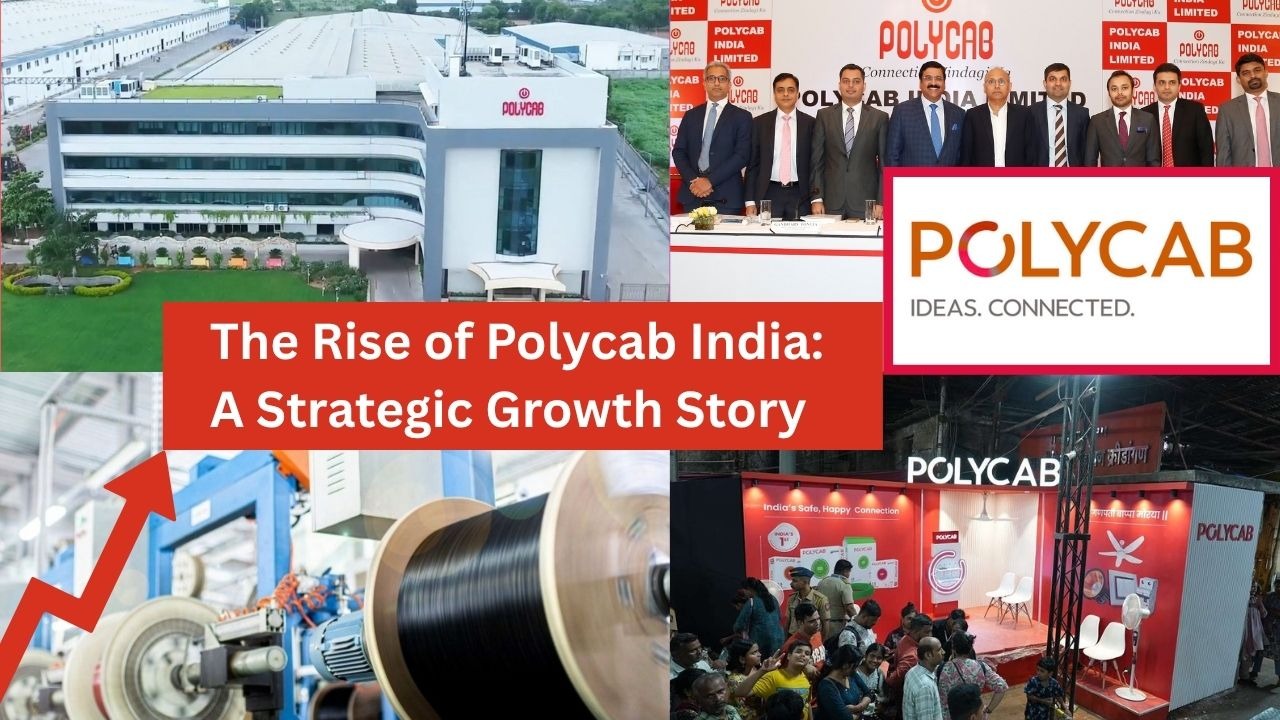
Initially established as Polycab Wires Private Limited in January 1996 and subsequently becoming a public limited company in June 2000, Polycab India Ltd. has grown to be India’s largest manufacturer of cables and wires, with its market share being approximately 12% of the overall market and about 18% of the organized market. In addition to wires and cables, the company also manufactures fast-moving electrical goods (FMEG), including electric fans, LED lights and luminaires, switches and switchgear, and solar products, as well as conduits and accessories.
Polycab has a wide manufacturing footprint, with more than 25 plants, and a highly developed distribution network with more than 4000 dealers and more than 165,000 retail outlets. The company has shown robust growth financially, as its wires and cables segment has grown at an approximately 9% annual growth rate over the past five years, with its FMEG business increasing at an annual growth rate of nearly 44%. Overall, Polycab’s revenues have been increasing at an approximate annual growth rate of 14% with strong profit growth.
Key Challenges
Though Polycab India enjoys a strong position, it contends with some major challenges:
- Intense competition and pricing pressure: The wires, cables, and electrical goods industry in India is fragmented, with an unorganized sector that diminishes pricing power for the organized players like Polycab.
- Large operational complexity: Given Polycab has a large variety of products manufactured in-house, it has a large operational complexity. It may be that maintaining large-scale customer records leads to delays in order processing and functions.
- Exposure to economic cycles and raw material prices: Polycab has material input costs associated with copper, aluminum, and PVC; hence, like other companies, Polycab is always exposed to commodity price fluctuations.
- Technological threats and environmental challenges: New technologies adopted by competitor firms, environmental regulations, and the risk of losing market share to cheaper unbranded competitors continue to exist.
Strategic Responses
Polycab India has adopted several strategies to overcome these challenges:
- Backward integration: The company produces key raw materials such as copper rods, aluminum rods, and PVC compounds, helping secure supply and control costs.
- Distribution and brand expansion: With a strong network of dealers and retailers, Polycab leverages its brand presence to expand reach and counter competition.
- Product diversification: By expanding into FMEG products like fans, lighting, solar solutions, and switchgear, the company has reduced dependency on the wire and cable segment.
- Flexible pricing and cost management: Polycab employs mechanisms like fixed raw material contracts and price-escalation clauses to manage commodity volatility.
- Infrastructure-focused growth: The company strategically aligns itself with India’s infrastructure development and renewable energy projects to capture high-demand opportunities.
Results & Outlook
These strategic moves have delivered consistent growth for Polycab India across both its core and diversified business segments. Its profitability and return ratios have improved steadily, supported by low debt levels and operational efficiency.
Looking ahead, Polycab is well-positioned to benefit from India’s infrastructure expansion, housing demand, and increasing electrification. However, maintaining margins, managing raw material fluctuations, and innovating in product design will be critical to sustaining its leadership.

Gireesh Sharma
Director, Manufacturing Industry