Applying the Theory of Constraints in Indian Manufacturing
Indian manufacturing operates in a complex environment shaped by fluctuating demand, infrastructure limitations, regulatory requirements, supply chain disruptions, and increasing global competition. Despite these challenges, India aims to expand manufacturing’s contribution to GDP through initiatives like Make in India and the Production Linked Incentive (PLI) schemes.
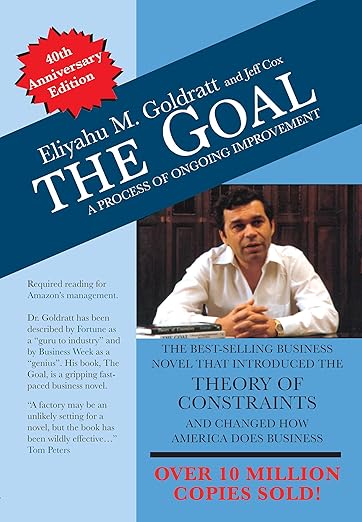
One powerful management philosophy that can significantly enhance productivity and competitiveness in Indian manufacturing is the Theory of Constraints (TOC). Developed by Dr. Eliyahu M. Goldratt, TOC focuses on identifying and managing the most critical limiting factor—known as the constraint—that prevents a system from achieving higher performance.
In the context of Indian manufacturing, where many factories operate with uneven capacities, manual processes, and supply chain uncertainties, TOC offers a practical framework to improve throughput, reduce inefficiencies, and increase profitability without large capital investments.
Understanding the Theory of Constraints
The core idea of TOC is simple: every system has at least one constraint that limits its performance.
A constraint can take many forms, including:
- A slow machine
- Limited skilled manpower
- Poor production planning
- Material shortages
- Regulatory delays
- Logistics bottlenecks
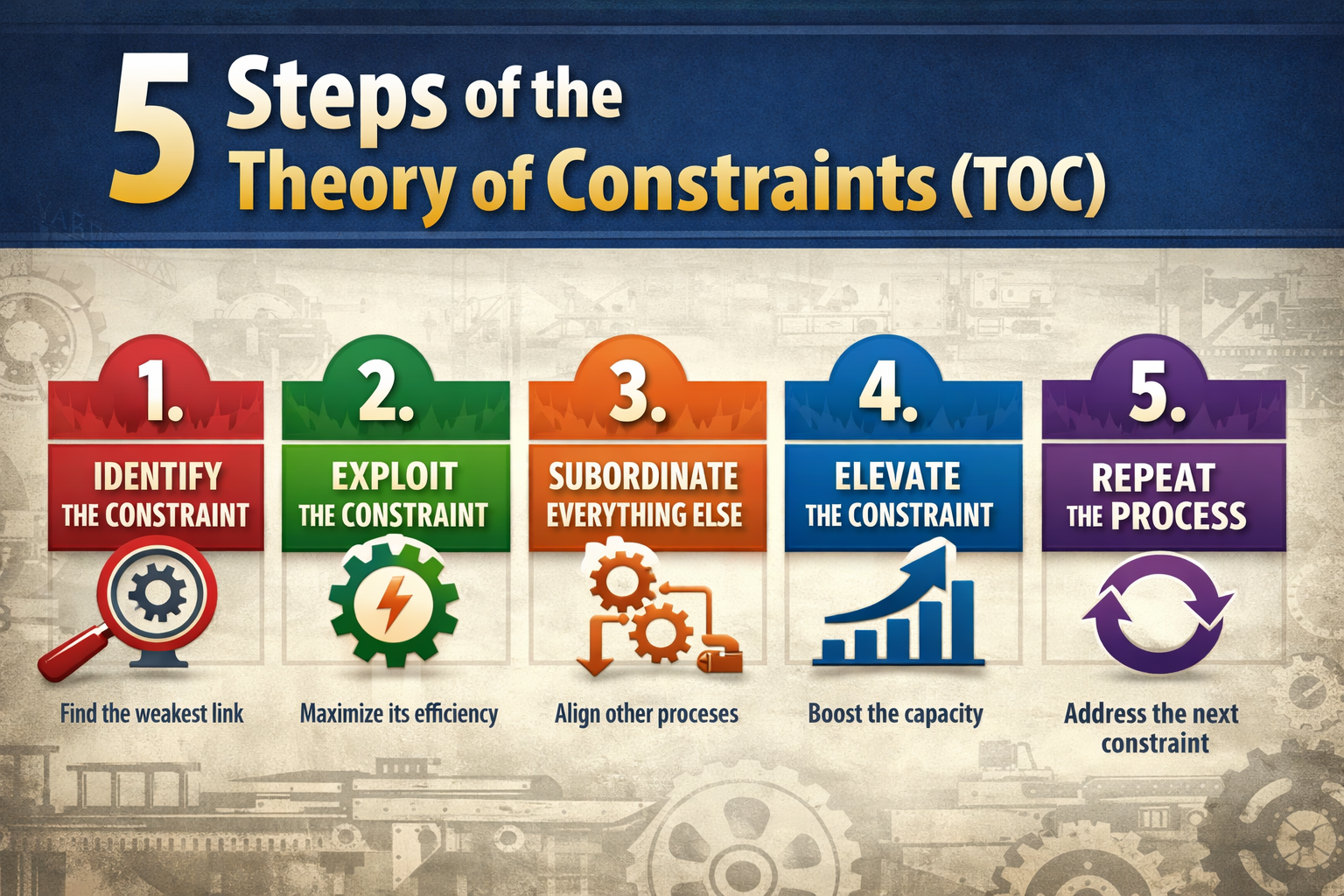
TOC suggests five focusing steps to manage constraints effectively:
- Identify the Constraint – Determine the weakest point that limits overall output.
- Exploit the Constraint – Ensure the constraint operates at maximum efficiency without interruptions.
- Subordinate Everything Else – Align all other processes to support the constraint.
- Elevate the Constraint – Increase the capacity of the constraint through improvements or investment.
- Repeat the Process – Once one constraint is resolved, another will eventually emerge.
Why TOC is Relevant for Indian Manufacturing
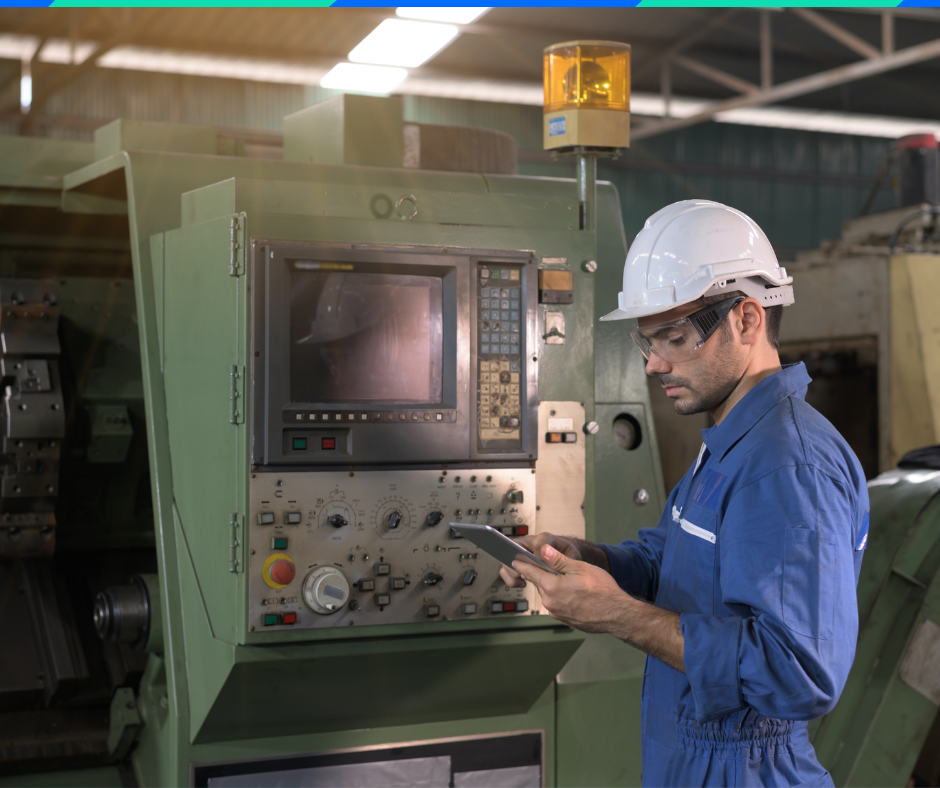
Many Indian manufacturing units, particularly MSMEs, struggle not due to lack of effort but because of hidden bottlenecks and misaligned processes. Unlike multinational factories that rely heavily on automation and ERP systems, many Indian factories still operate with experience-based production management.
TOC provides a structured approach to managing production flow and identifying bottlenecks that restrict productivity.
1. Uneven Machine Capacities
In many Indian factories, production systems evolve gradually with machines added over time rather than through balanced system design. As a result, one machine becomes overloaded while others remain underutilized. By identifying the bottleneck machine and ensuring it runs continuously without interruptions from maintenance delays, material shortages, or operator absence, manufacturers can significantly increase overall plant output.
2. Manpower Constraints
Shortages of skilled operators and technicians are common in Indian manufacturing. In many cases, the true constraint is not machinery but human capability. Assigning the most experienced operators to bottleneck operations and ensuring proper training can improve productivity without increasing workforce size.
3. Supply Chain Delays
Material shortages and logistics delays frequently disrupt production. TOC recommends prioritizing material availability for bottleneck processes so that the most critical operation never stops due to missing inputs.
The Way Forward
The Theory of Constraints shifts management thinking from maximizing individual machine utilization to optimizing the flow of the entire system. For Indian manufacturers seeking global competitiveness, TOC offers a practical and cost-effective approach to increasing throughput, reducing inventory, and improving delivery reliability.
When combined with modern practices such as Lean Manufacturing, Industry 4.0, and digital production monitoring, TOC can help Indian manufacturing organizations achieve higher efficiency and sustainable growth.
Want to learn more or implement TOC write to writer@manufacturingindustry.in.

The Theory of Constraints shifts management thinking from maximizing individual machine utilization to optimizing the flow of the entire system. For Indian manufacturers seeking global competitiveness, TOC offers a practical and cost-effective approach to increasing throughput, reducing inventory, and improving delivery reliability.
When combined with modern practices such as Lean Manufacturing, Industry 4.0, and digital production monitoring, TOC can help Indian manufacturing organizations achieve higher efficiency and sustainable growth.